News
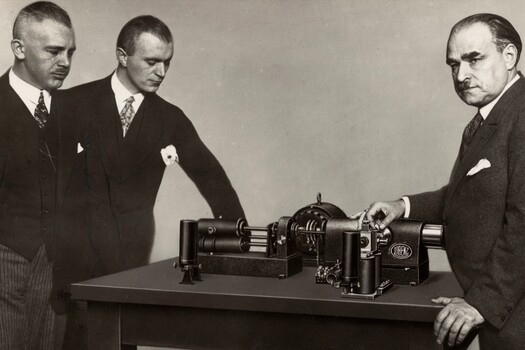
In October 1906, Arthur Korn's invention successfully transmitted a recognizable photograph over 1,800 kilometers of telegraph wire from Munich to Nuremberg. This breakthrough solved the challenge of converting continuous tones of light and shade in a photograph into electrical signals that could travel and be reconstructed at the receiving end. Previous attempts, like those by Alexander Bain and Giovanni Caselli, could transmit handwriting and line drawings but not the gradations of a photograph. Korn's machine, building on earlier scanning and conversion principles, allowed a photograph to be sent directly, marking a significant advancement in image transmission technology.
Arthur Korn transmitted the first photograph by wire in 1906.
The transmission covered approximately 1,800 kilometers from Munich to Nuremberg.
The invention converted light and shade into electrical signals for transmission.
Earlier technologies could transmit line drawings but not continuous photographic tones.