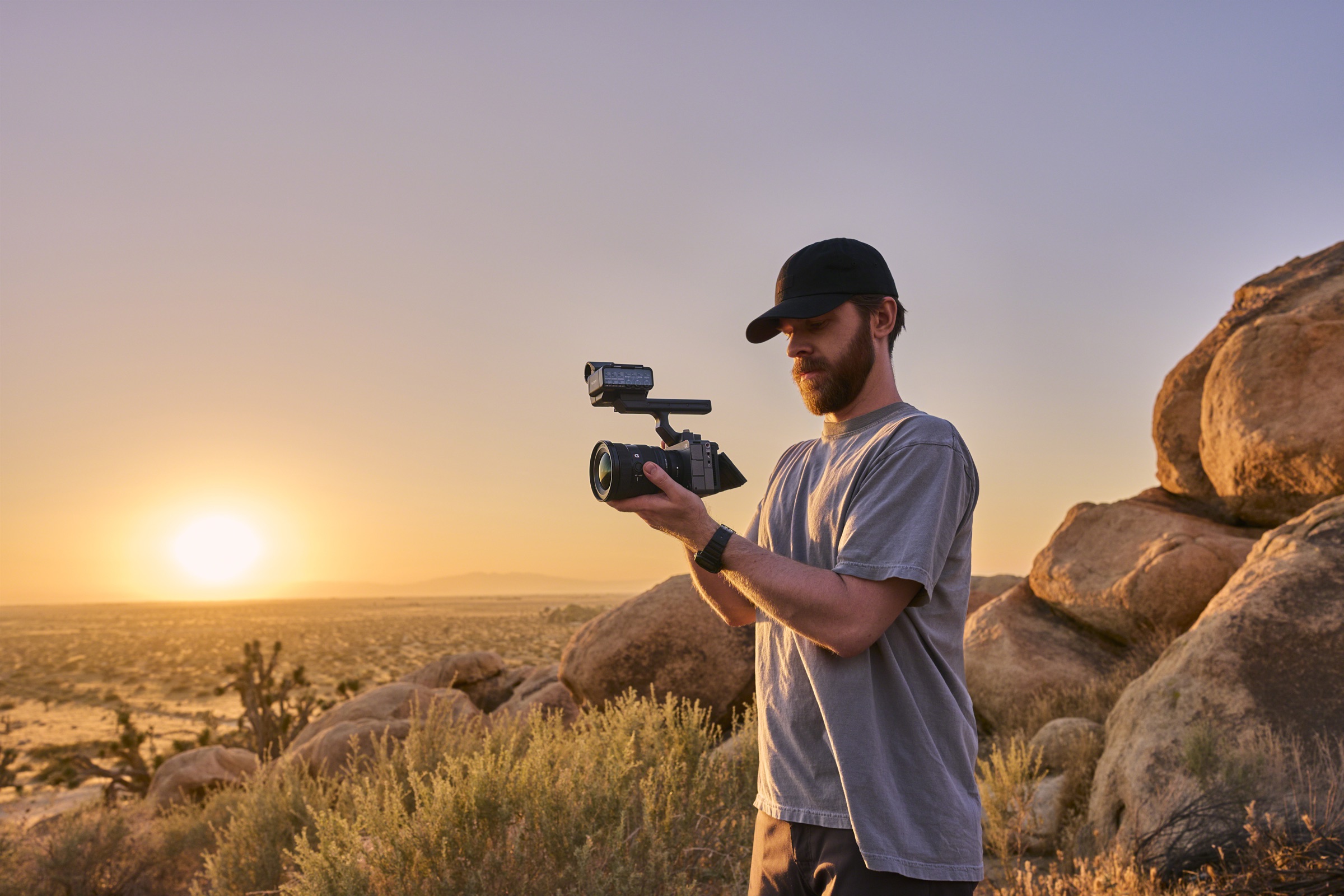
Sony has announced the FX5, a compact full-frame Cinema Line camera positioned between the FX3A and FX6. It uses a new 16.6-megapixel stacked sensor, records 5K in a 3:2 open-gate format and brings Sony’s X-OCN RAW codec into the camera body. Three base ISO settings, a CineAlta-style interface and a new optional viewfinder round out the main changes.
This article is a launch-day analysis based on Sony’s documentation and the first reports from reviewers who used pre-production cameras. LensDigest has not tested a retail FX5. That distinction matters because several recording modes demonstrated during the launch are scheduled for a later firmware release.
The body-only price is $4,899.99 in the United States and €5,400 in Europe. A European kit with the new XLR-H2 audio handle is listed at €6,000. Sony expects the camera to ship in August.
Pre-production cameras and the firmware roadmap
The initial coverage mixes features available at launch with functions planned for Version 2.0 firmware in 2027. Sony says the shipping camera will record 5K open gate at up to 60p, 4K at up to 120p and Full HD at up to 240p. The later firmware is intended to add 5K open-gate X-OCN at 120p, 4K X-OCN at 240p, XAVC S-I open-gate recording, improvements for vertical shooting and in-camera frame grabs.
CineD’s Johnnie Behiri used a pre-production body running prototype Version 2.0 firmware. Sony allowed some future modes to be tested but restricted the footage that could be published. His review therefore concentrated on 5K full-frame open gate at 24p in X-OCN LT, together with camera operation, autofocus, monitoring and anamorphic support.
Review status: the early results are useful, but they are not a substitute for testing a production camera with final shipping firmware. Codec compatibility, heat management and every resolution/frame-rate combination still need to be checked.
Main specifications
- Sensor: 16.6MP full-frame stacked Exmor RS CMOS
- Processor: BIONZ XR2 with a dedicated AI processing unit
- Base ISO: 800, 4000 and 12,800
- Launch recording: 5K 60p, 4K 120p and Full HD 240p
- RAW: internal 16-bit X-OCN LT, C1 and C2
- Media: two slots compatible with CFexpress Type A and SD cards
- Stabilisation: Standard, Active and Dynamic Active modes
- US / EU price: $4,899.99 / €5,400 body only
Sensor, readout and base ISO
The FX5’s 16.6-megapixel resolution is modest by current full-frame standards, although it is a sensible figure for a camera designed primarily for motion. The stacked architecture is intended to improve readout speed, while the pixel count allows a 5K open-gate image without producing unnecessarily large files for every recording format. Sony claims more than 15 stops of dynamic range in S-Log3. A production-firmware lab test will be needed to verify that figure and measure rolling shutter.
The camera offers base ISO settings of 800, 4000 and 12,800. ISO 4000 is likely to be particularly useful for interiors and available-light documentary work, where ISO 800 may require more light and ISO 12,800 may be unnecessarily high. Gerald Undone’s pre-production test also found the camera’s 4K image slightly more detailed than the FX3, though it does not have the crisp oversampled appearance of some higher-resolution competitors.
Sony also includes a separate Dual Gain mode. This is easy to confuse with the three base ISO settings, but it operates differently. Dual Gain combines sensor information to reduce noise in darker areas and places limits on exposure settings and frame rates. In Log, the base ISO is fixed at 800 and the maximum EI is 3200. The maximum frame rate is 30p in 5K 3:2 and 60p in other supported modes. It is best treated as a specialised low-noise option rather than a general shooting mode.
5K 3:2 open-gate recording
Open gate uses the full height of the 3:2 sensor instead of extracting a 16:9 area. The extra image above and below the conventional frame is useful for anamorphic lenses, reframing and stabilisation. Productions delivering both horizontal and vertical versions can also create several aspect ratios from one master shot.
The FX5 provides in-camera de-squeeze settings for 1.3x, 1.5x, 1.6x, 1.8x and 2.0x lenses. Behiri found a limitation in the prototype firmware: stabilisation was unavailable when recording full-frame open-gate X-OCN with anamorphic de-squeeze enabled. Sony has not yet confirmed whether this combination will behave differently in the shipping firmware.
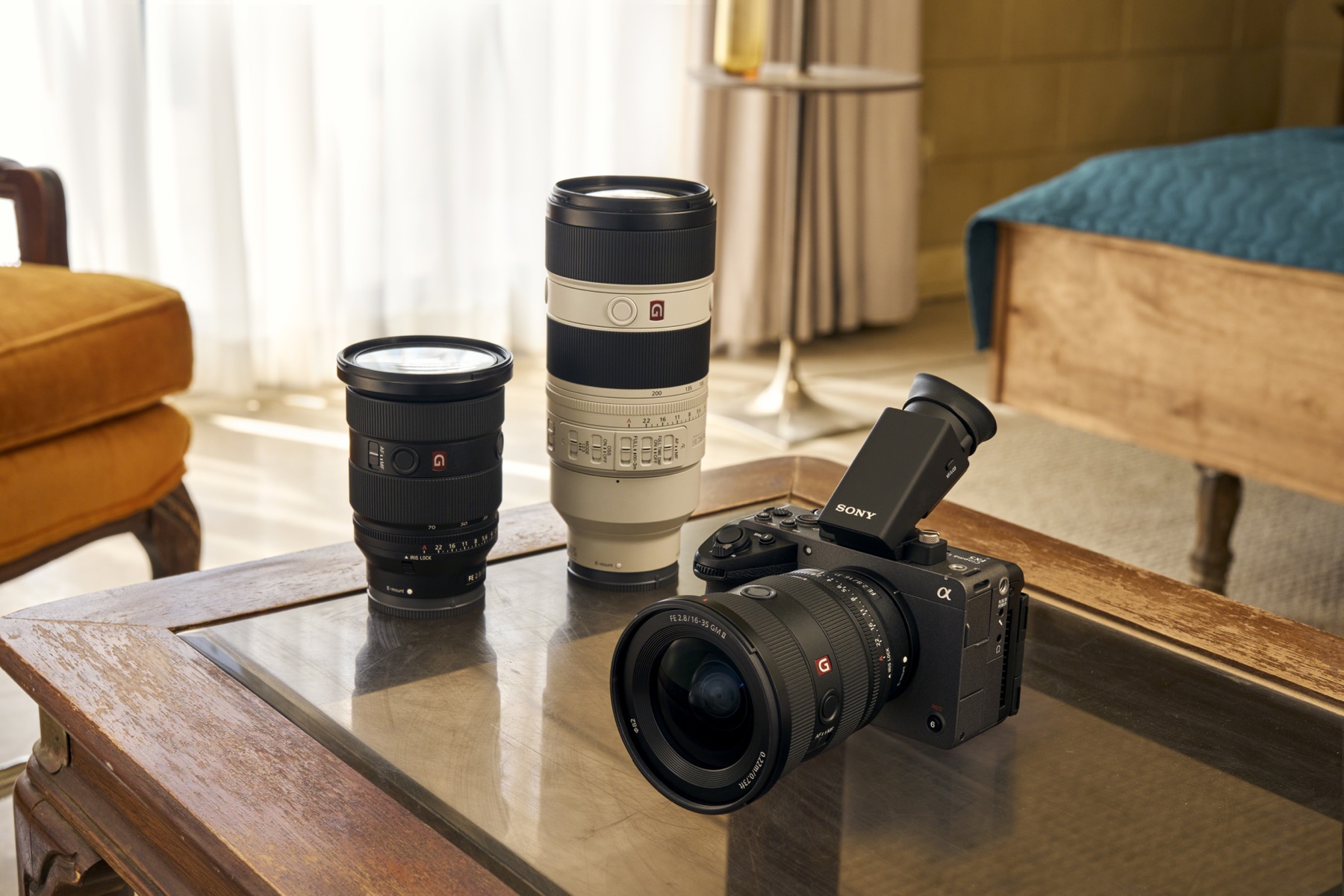
Internal X-OCN recording
The FX5 records 16-bit X-OCN internally in three compression levels. LT is the established option used by cameras including the BURANO. C1 and C2 are new, more compressed variants intended to reduce card and storage requirements.
CineD compared the three formats at 5K full-frame open gate, 24p. One minute used 5.54GB in X-OCN LT, 4.13GB in C1 and 3.34GB in C2. At that rate, an hour of C2 is approximately 200GB. Sony recommends VPG400 CFexpress Type A cards for X-OCN. SD cards are accepted, although Sony does not guarantee that every card will sustain the data rate required by every mode.
Post-production support is an immediate concern. Behiri received beta software from Sony and used an upcoming version of DaVinci Resolve, then converted his footage to ProRes 4444 for editing in Adobe Premiere Pro. Buyers who depend on a particular NLE should confirm native X-OCN support before planning a job around the format. The camera does not record directly to an external USB-C SSD.
Technical video: Gerald Undone’s pre-production sensor analysis covers readout, detail and noise in greater depth.
Body, controls and monitoring
The FX5 keeps the compact, flat-top layout of the FX3 family but uses a Cinema Line operating system derived from Sony’s CineAlta cameras. Operators coming from the BURANO or VENICE will recognise the structure. FX3 and Alpha users should expect a learning period.
The 3.5-inch, 2.76-million-dot LCD uses a four-axis mechanism and leaves room for shooting information around the image. Monitoring tools include false colour, waveform, vectorscope, histogram, zebras and Focus Map. CineD found the false-colour display clear and useful, while noting that the electronic level is too small and some LUT and flexible-focus controls remain confusing.
The body includes a deeper handgrip, several 1/4-inch mounting points, two tripod sockets, full-size HDMI, wired LAN and two USB-C ports. Timecode requires Sony’s optional USB-C-to-BNC adapter. A cooling fan is built in, although long-duration thermal testing has yet to be completed on a production body.
Autofocus, white balance and stabilisation
The BIONZ XR2 processor incorporates Sony’s AI subject-recognition system. Human pose estimation can continue tracking when the subject’s eyes or face are obscured. CineD reported reliable tracking at ISO 12,800 in very dark conditions, though the camera and firmware were both pre-production.
Auto Tracing White Balance combines visible-light and infrared measurements with Sony’s light-source recognition. The aim is to produce smoother changes under mixed lighting. This could be valuable for documentary and event work, but it needs broader testing in scenes with LEDs, practical lamps and changing colour temperatures.
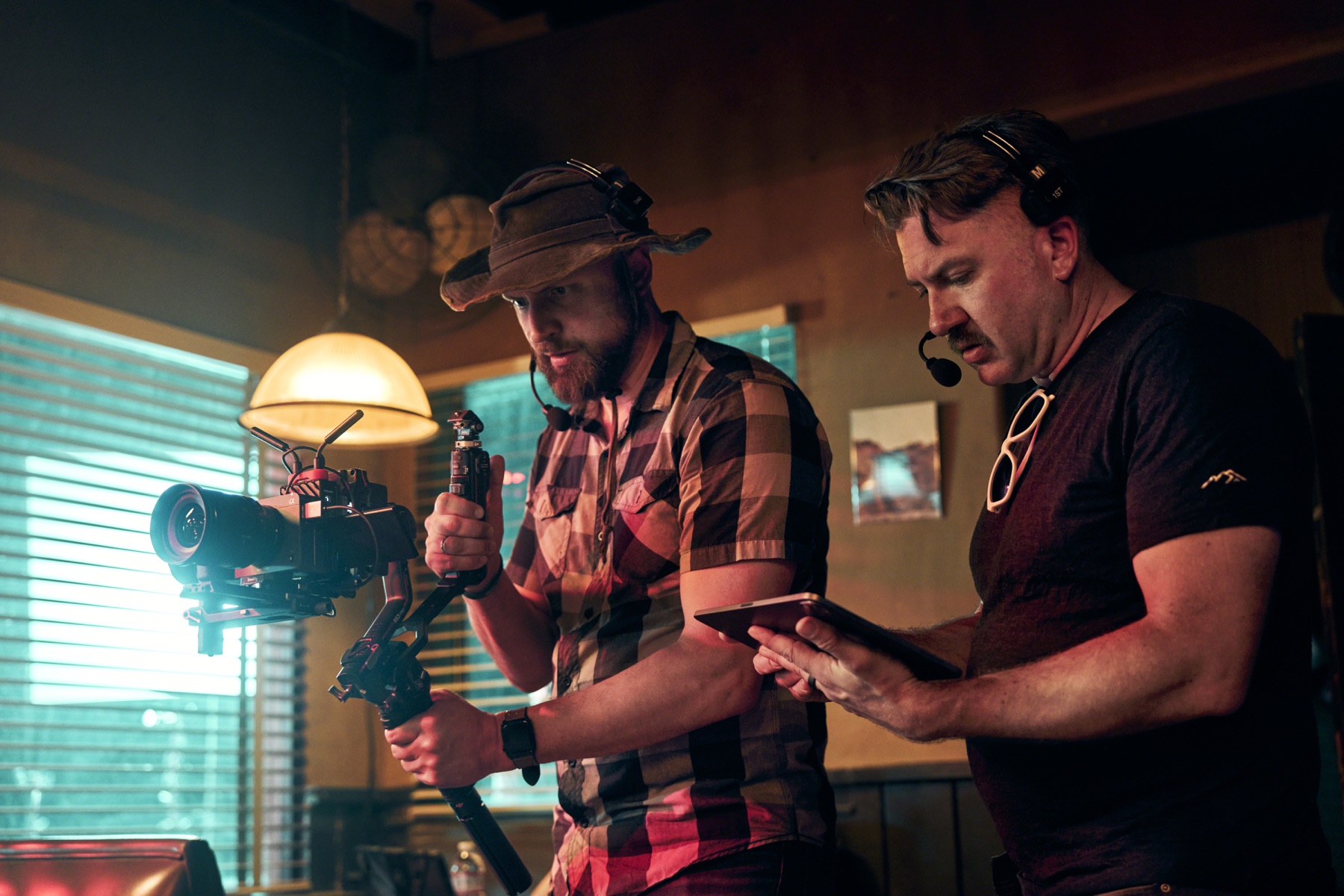
Standard, Active and Dynamic Active stabilisation modes are available. Each stronger setting applies a larger crop. The open-gate image provides additional room for post-production stabilisation, which may be useful when the in-camera system is unavailable in a particular anamorphic configuration.
Viewfinder, audio handle and battery system
Sony’s optional DVF-EL1 is a 7.08-million-dot OLED viewfinder that tilts through 90 degrees. CineD welcomed the return of a detachable EVF but criticised the hard rubber eyecup for operators wearing glasses. The European price is €750, and the viewfinder is compatible only with the FX5.
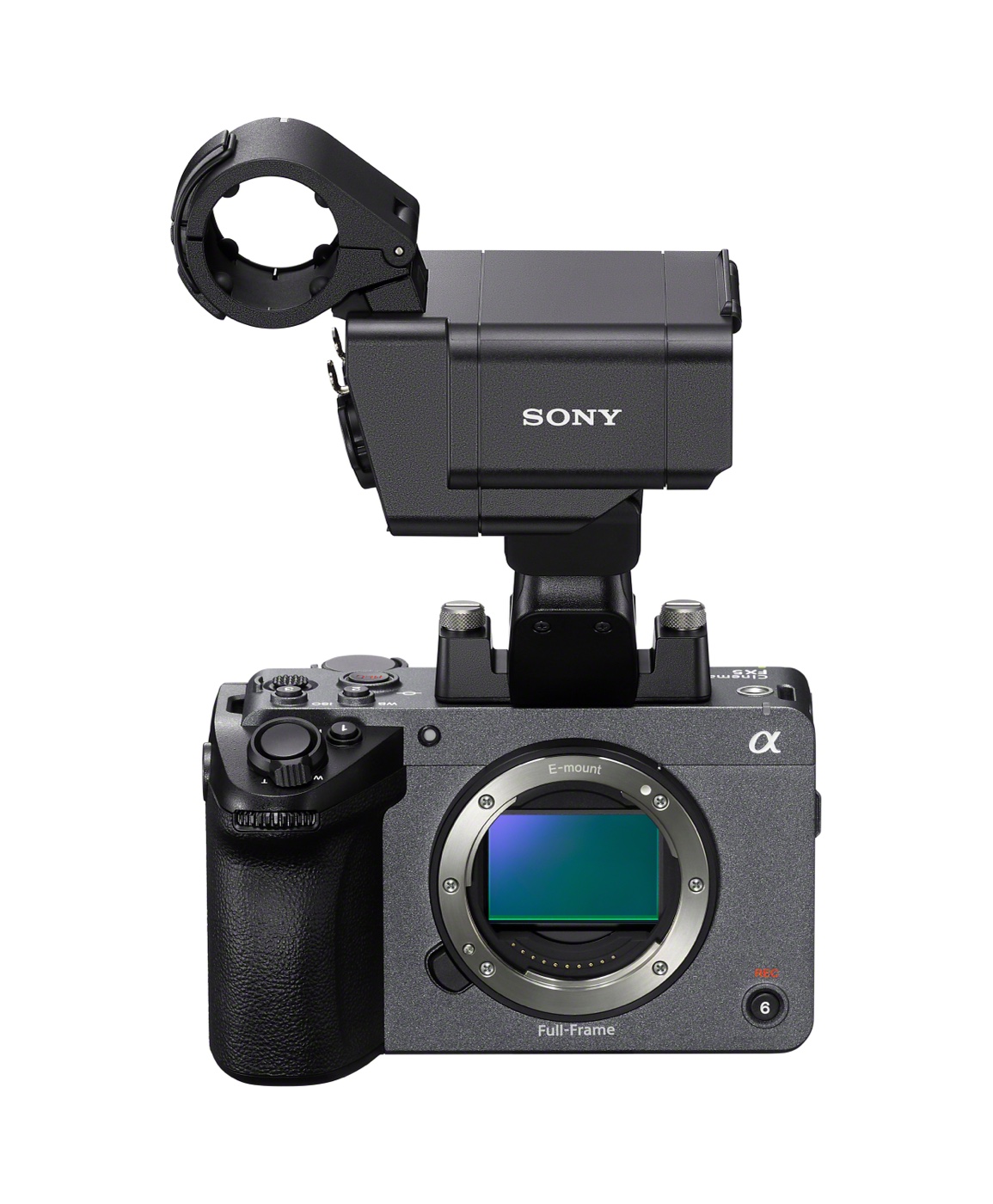
The XLR-H2 handle supports four-channel 96kHz, 32-bit-float audio and costs €900 in Europe. The viewfinder and audio handle use the same accessory connection, so they cannot be attached at the same time. Documentary operators who need both XLR audio and an eye-level finder will have to choose another audio arrangement or use an external monitor.
The camera uses Sony’s newer NP-SA100 battery. Existing NP-FZ100 batteries do not fit. A dual charger is included, but FX3 owners moving to the FX5 will need a separate battery pool.
Missing features
The FX5 has no internal electronic variable ND filter. This remains one of the FX6’s largest advantages for documentary, factual and event work. There is also no SDI output, no still-photo mode and no direct USB-C SSD recording.
Those omissions establish a clear boundary between the FX5 and FX6. They also mean that the lower body price does not tell the complete story. Depending on the job, a working package may require CFexpress cards, a reader, ND filters or a matte box, additional batteries, timecode hardware and either the viewfinder or XLR handle.
FX5, FX3A or FX6?
FX3 owners should base the decision on specific production requirements. The FX5 adds open gate, internal X-OCN, the ISO 4000 base setting, better monitoring tools and a cinema-oriented interface. Shooters working mainly in 4K 24p with S-Cinetone or XAVC may gain little from changing a reliable, fully rigged FX3.
The FX6 is still the stronger choice when electronic variable ND, SDI and conventional camcorder operation are essential. The FX5 is better suited to gimbals, compact handheld setups, small narrative crews and productions that want internal RAW without moving to a larger body. Hybrid photographers should consider another camera because the FX5 does not capture stills.
Conclusion
The FX5 brings several long-requested Cinema Line features into a genuinely compact body. The new sensor, 5K open-gate mode, internal X-OCN and three base ISO settings are substantial additions. Sony has also given the camera proper exposure and monitoring tools instead of relying on an external monitor for routine operation.
There are important reservations. Some headline recording modes will arrive later, X-OCN support in editing software is still developing, and the lack of internal ND or SDI will rule the camera out for some crews. The accessory connector also forces an unnecessary choice between the new viewfinder and XLR handle.
Based on the launch material and pre-production tests, the FX5 appears to be a strong option for owner-operators who need a small cinema body with flexible recording formats. A final recommendation should wait for production firmware and an independent lab test.
First-look video: PetaPixel’s launch-day discussion with Jordan Drake.
Sources and further viewing
This feature synthesises Sony's launch materials, independent tests, hands-on reports and market references published on launch day. All links were accessed on July 22, 2026.
Official Sony material
- Sony Electronics launches the FX5 — Sony Alpha Universe
- Sony Europe FX5 press release — Sony Press Centre
- Sony FX5 product page and specifications — Sony
- Introducing the Sony FX5: Breaking Down Barriers with Gareth Edwards — Sony Cine
- Official FX5 press-image package — Sony Press Centre
Official videos
- Introducing Cinema Line FX5 — Sony Camera Channel
- Product Announcement Cinema Line FX5 — Sony Camera Channel
- A Camera Test for Sony by Gareth Edwards — Shot on FX5 — Sony Cine
Reviews and analysis
- Sony FX5 Review — Finally, a Compact Camera Worthy of the Cinema Line Name — CineD
- Sony FX5: A Highly Optimized Sensor (Tested) — Gerald Undone
- This Is Sony's Mic Drop Moment — PetaPixel
- Sony FX5 Review — video edition — CineD
- Hands-on Sony FX5: new sensor, open gate and triple ISO — VIDEOAKTIV
- Sony ILME-FX5: 5K open gate, internal X-OCN and a larger display — VIDEOAKTIV
- Sony FX5 hands-on: a highly flexible workhorse — Galaxus
- The new Sony FX5 at a glance: features and FX3 differences — Foto Koch
- Sony FX5: what the first testers say — Photografix Magazin