SUMMARY
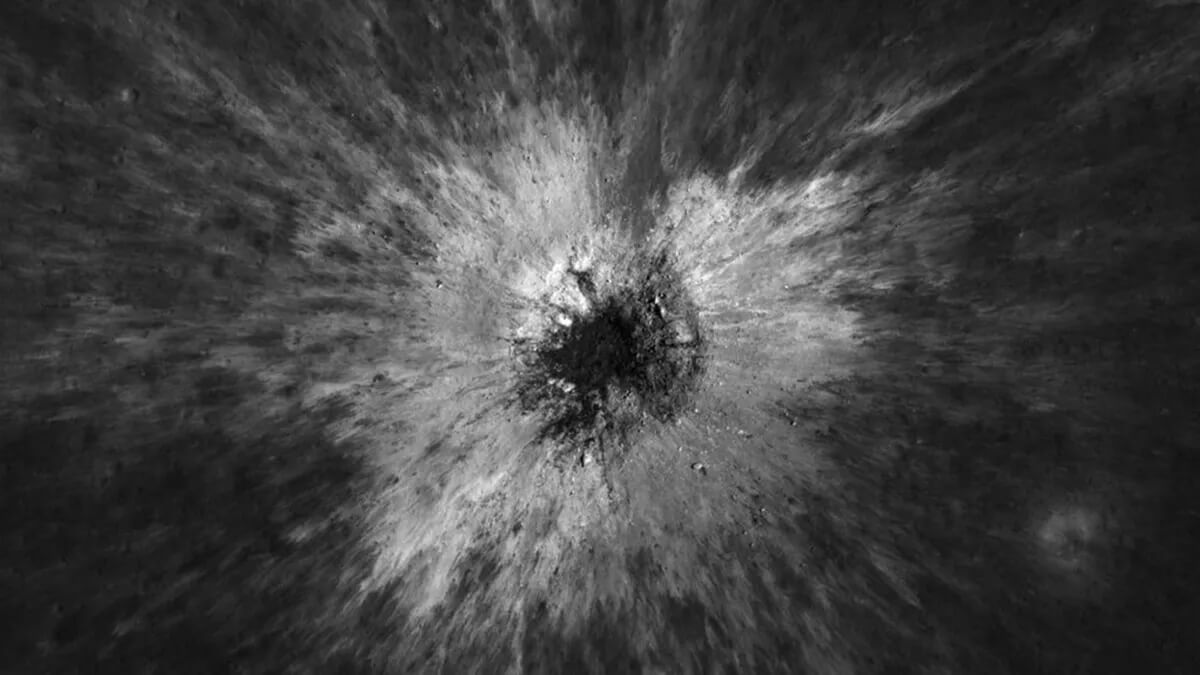
NASA announced the discovery of a large new crater on the Moon, officially named McGetchin crater, which is approximately 728 feet across and 141 feet deep. This 'once in a century' event was not observed directly but identified by comparing hundreds of images captured over nearly 15 years by two distinct camera systems aboard the Lunar Reconnaissance Orbiter (LRO). Initially, an ultra-wide-angle camera (WAC) was used to detect the impact zone as a bright spot. Subsequently, more detailed Narrow-Angle Cameras (NACs) were employed to measure the crater's dimensions and study the surrounding ejecta, providing insights into the size and force of the impacting object.
TAKEAWAYS
A new moon crater, McGetchin crater, was discovered by NASA.
The discovery was made by comparing lunar images taken over 14 years with different cameras.
An ultra-wide-angle camera initially detected the impact site.
Narrow-angle cameras were used for detailed measurements and analysis of the crater.