SUMMARY
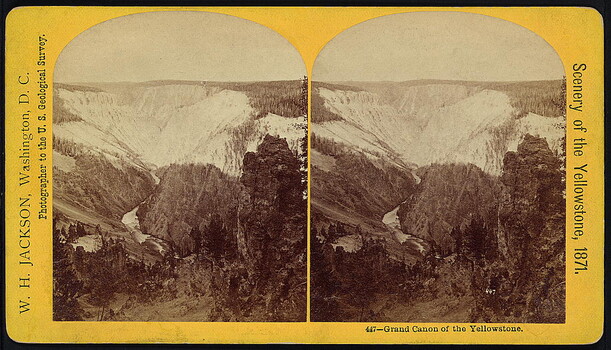
In 1871, photographer William Henry Jackson joined Ferdinand V. Hayden's geological survey of the Yellowstone region. Working with a cumbersome wet plate collodion process in challenging terrain, Jackson captured images of geysers, terraces, and canyons. These photographs, along with artist Thomas Moran's field watercolors, were presented to Congress. Unlike written reports or drawings, Jackson's images offered concrete proof of Yellowstone's wonders, helping to overcome skepticism and lobby for the creation of the park, which was signed into law in 1872.
TAKEAWAYS
William Henry Jackson's 1871 survey photographs were crucial in proving Yellowstone's existence to Congress.
The wet plate collodion process required developing negatives on-site before the emulsion dried.
Jackson's images provided tangible evidence that written reports and artist's sketches could not match.
The photographs were used as lobbying tools to convince lawmakers to establish the world's first national park.