SUMMARY
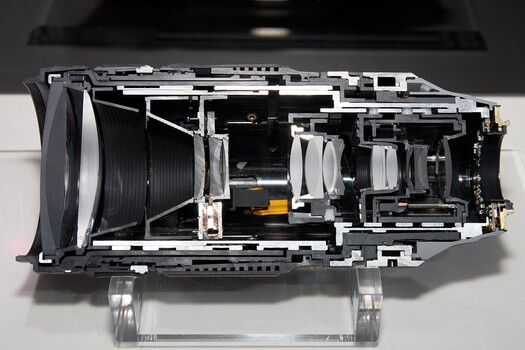
Image stabilization in cameras counteracts small movements that can blur photos by either shifting lens elements or moving the image sensor. Optical stabilization (IS, VR, OSS, etc.) uses a gyroscope to detect rotation and a voice coil motor to move a correction group of lens elements. In-body stabilization (IBIS) floats the sensor on magnets, allowing it to move in multiple directions to chase the image. While marketing often cites five axes of stabilization, the physical mechanisms typically involve three degrees of freedom. Coordinated systems combine lens and body stabilization for enhanced performance, especially at close focusing distances where linear movements become more significant.
TAKEAWAYS
Optical stabilization shifts lens elements to correct image drift detected by gyroscopes.
In-body stabilization moves the image sensor using magnets and voice coil motors.
Gyroscopes detect rotation, while accelerometers are needed for linear movements.
Combined lens and body stabilization systems offer enhanced performance.