SUMMARY
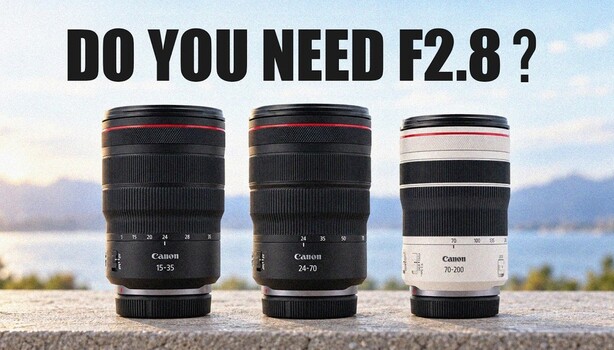
Martin Castein explores when the added weight and cost of an f/2.8 zoom lens are justified over an f/4 counterpart. The primary benefit of f/2.8 is its utility in low-light situations with moving subjects, such as sports or receptions. However, advancements in in-body stabilization, optical stabilization, and noise reduction software have shifted the balance, allowing f/4 lenses to remain viable in more scenarios. For static scenes like landscapes, tripods and smaller apertures are often preferred, while for portraits, f/2.8 can be used to achieve background blur even in brighter conditions.
TAKEAWAYS
f/2.8 zooms are heavier, more expensive, and larger than f/4 versions.
f/2.8 is most beneficial for low-light shooting with moving subjects.
Stabilization and noise reduction tools expand the usability of f/4 lenses.
The practical benefit of an f/2.8 lens depends on the photographer's specific needs and subjects.