SUMMARY
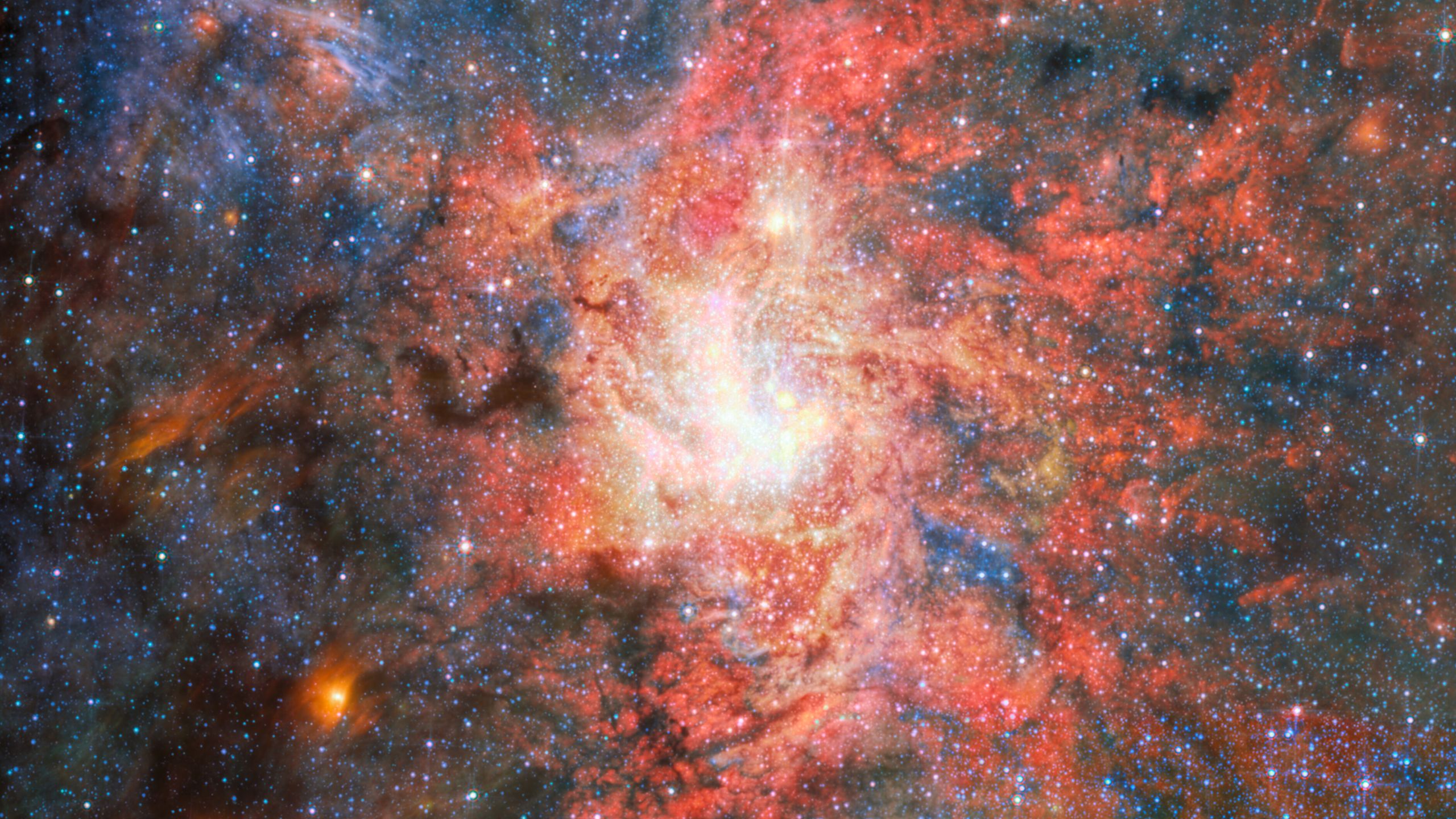
A new photograph from the James Webb Space Telescope, analyzing star IRS 3 located 0.55 light-years from the Milky Way's central black hole, has revealed the presence of water and oxygen-rich dust. This discovery is significant because it suggests that molecular material, including water, can survive in environments dominated by intense radiation. The mid-infrared camera on the Webb telescope was crucial for penetrating dust clouds and analyzing the star's composition. Researchers are excited by the findings, as they indicate that even aging stars near supermassive black holes can contribute essential ingredients for new star and planet formation.
TAKEAWAYS
Webb Telescope captured an image of star IRS 3 near the Milky Way's central black hole.
The image suggests water and oxygen-rich dust can survive in harsh, high-radiation space environments.
This finding challenges previous assumptions about molecular material survival near black holes.
The data was gathered using the James Webb's mid-infrared camera for the first time on IRS 3.