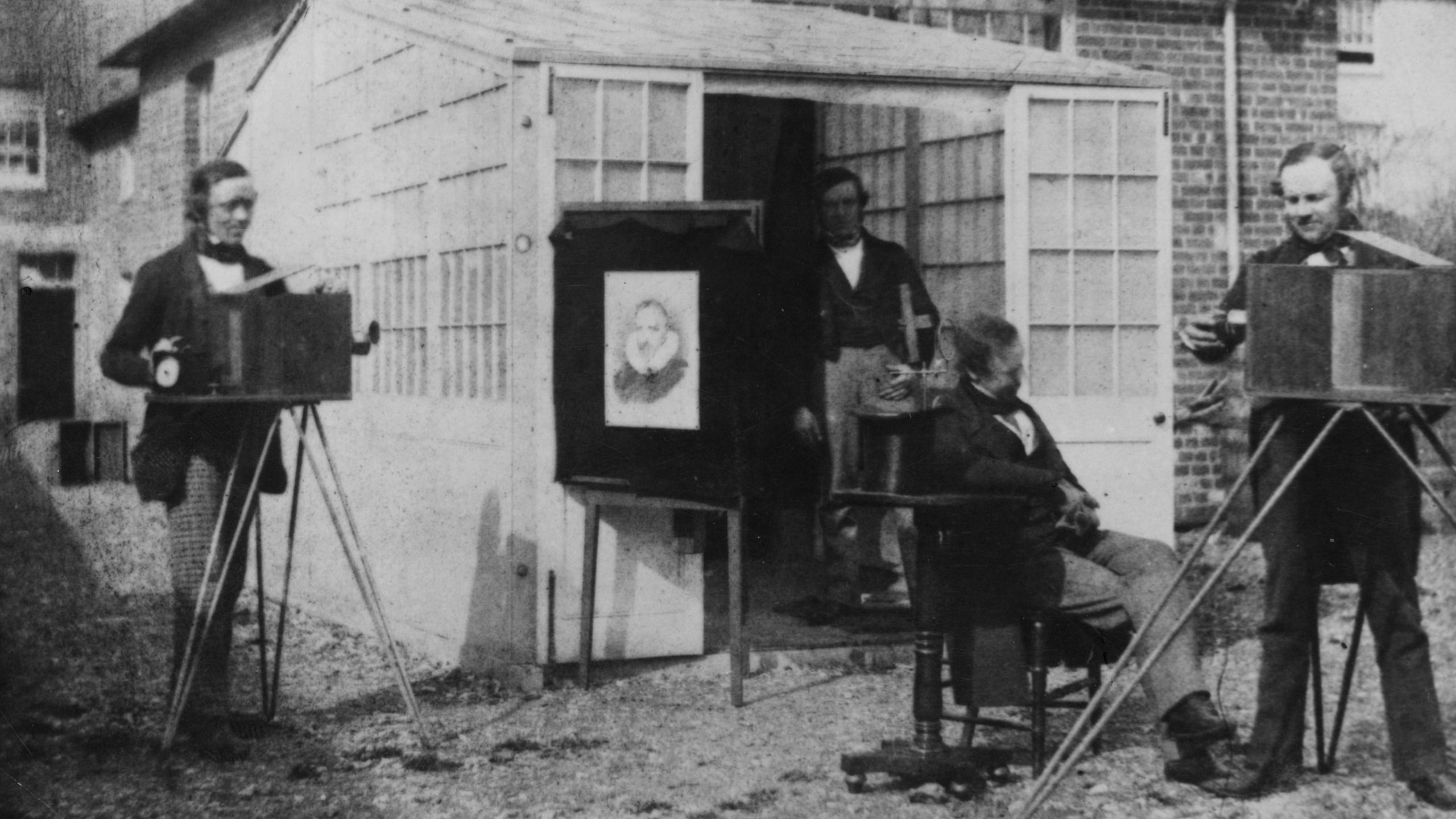
SUMMARY
In 1840, English chemist and photographer William Henry Fox Talbot discovered a method to significantly reduce the time required to take a photograph. Previously, early photographic processes like heliography and daguerreotypes took minutes to hours. Talbot's breakthrough involved using a gallic acid solution to develop images on light-sensitive paper, allowing photographs to be captured in a minute or less. This process, which he later patented as the calotype, also introduced the concepts of developing negatives, fixing images, and printing, laying foundational principles for analog photography.
TAKEAWAYS
William Henry Fox Talbot discovered a method to capture photographs in under a minute in 1840.
His process used a gallic acid solution to develop images, drastically shortening exposure times.
The calotype process, patented by Talbot, introduced negative development, fixing, and printing.
Talbot's innovations enabled photography of subjects that could not remain still for long exposures.