SUMMARY
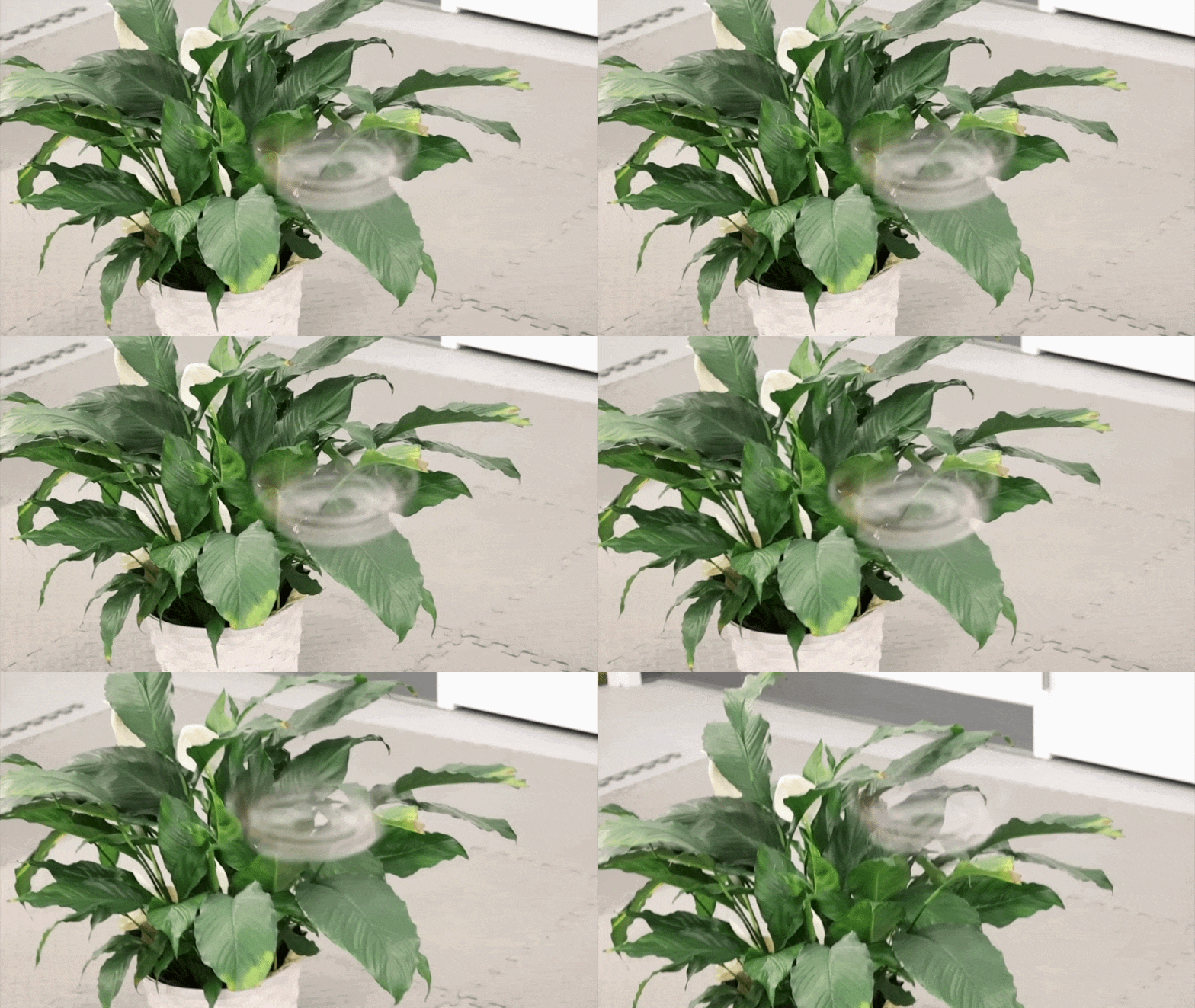
Researchers at Northwestern University have created a drone, dubbed "Phantom Twist," that achieves near invisibility by spinning at up to 25 times per second. This rapid rotation causes the drone to blur into near-invisibility, similar to how spinning drone propellers seem to disappear. The design leverages a quirk of human vision, where the eye accumulates visual signals over time, much like a camera's exposure. This low-visibility concept, presented by researcher Michael Rubenstein, could minimize disruption for wildlife monitoring and nature photography. While the drone is not yet equipped with a camera and has some visible components, the underlying principle of rapid rotation and AI-assisted design suggests future possibilities for stealthy aerial imaging.
TAKEAWAYS
Northwestern University developed a drone that appears invisible by spinning rapidly.
The drone exploits a human eye phenomenon similar to how cinema functions.
This technology could reduce disturbance for wildlife monitoring and nature photography.
AI was used to optimize the drone's design, generating and testing thousands of models.