News
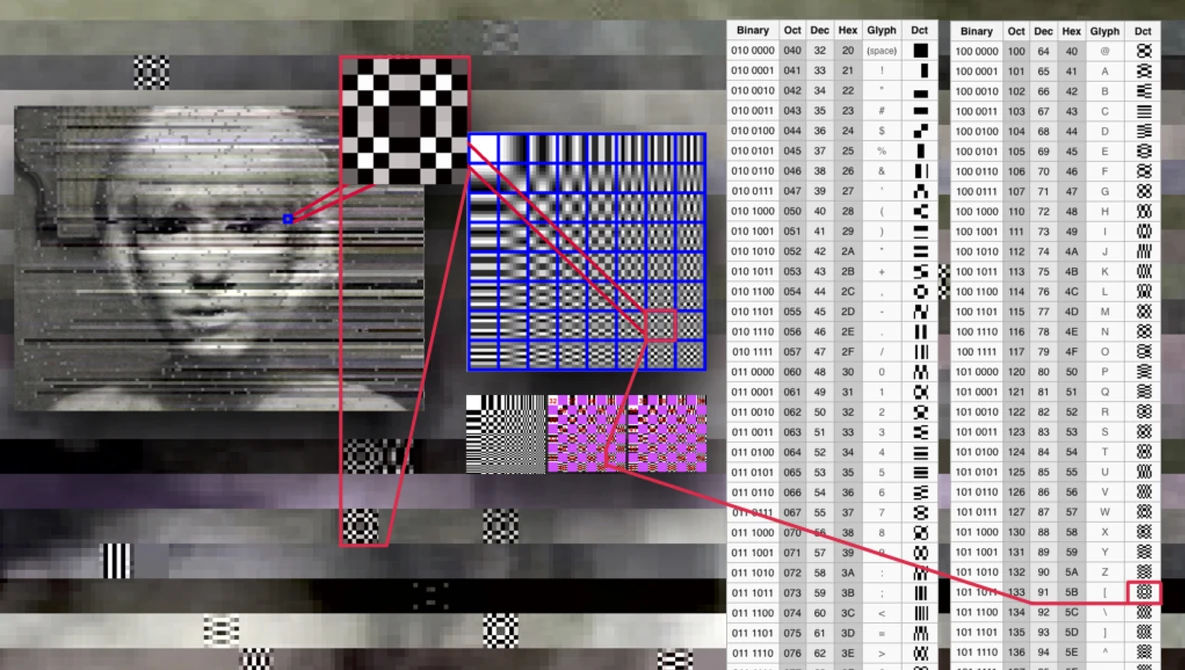
In 1972, Kansas State University professor Nasir Ahmed's proposal for a cosine transform was rejected by the National Science Foundation, with a reviewer calling the idea "too simple." Despite the lack of funding, Ahmed pursued the research, collaborating with students and colleagues. The resulting discrete cosine transform (DCT) proved highly effective, performing nearly as well as the more complex Karhunen-Loeve transform but with a fast, fixed algorithm. Published in 1974, the DCT is now the core mathematical operation used in JPEG compression, applied to 8x8 pixel blocks to represent image data efficiently.
Nasir Ahmed's 1972 proposal for a cosine transform was rejected by the NSF as "too simple."
Ahmed developed the discrete cosine transform (DCT) without grant funding.
The DCT is the mathematical basis for nearly all JPEG image compression.
The DCT efficiently transforms 8x8 pixel blocks into frequency coefficients.