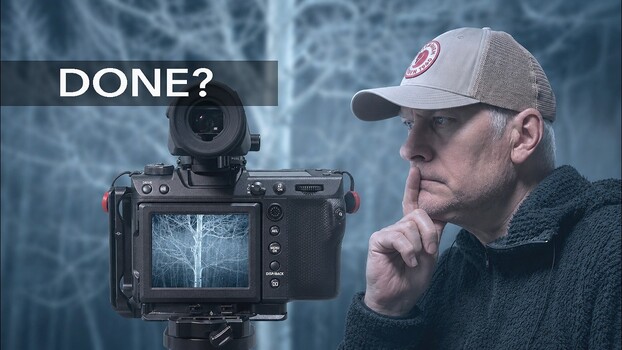
SUMMARY
Photographer Adam Gibbs explores the nuanced decision of when a photograph is truly finished, a skill honed over three decades. He explains that the process begins after the initial capture, focusing on visual elements like shapes and light rather than just subjects. Gibbs advocates for actively seeking compositional improvements through movement and observation, stressing that experience leads to more deliberate, less frequent adjustments. The core of his approach involves training oneself to see visual weight and balance, a transferable skill applicable to any camera and genre.
TAKEAWAYS
Knowing when to stop shooting is a critical, often overlooked, aspect of photography.
The real work on an image begins after the initial capture, involving composition and refinement.
Experienced photographers learn to see scenes as visual weights and shapes, not just subjects.
Compositional balance is achieved through visual weight, not necessarily symmetrical framing.