SUMMARY
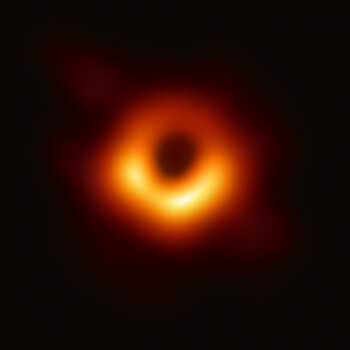
The groundbreaking image of the black hole M87* was not captured by a single camera or telescope but is a complex reconstruction. Scientists used very long baseline interferometry (VLBI) to combine radio data from eight telescopes across the globe, effectively creating a planet-sized virtual dish. This process required precise synchronization of atomic clocks and the physical transportation of petabytes of data on hard drives, as internet speeds were insufficient. The resulting image, a fuzzy orange ring, is a scientific interpretation where color was assigned to represent brightness, as the radiation itself is invisible.
TAKEAWAYS
The black hole image is a reconstruction from radio data, not a direct photograph.
Data was collected from eight telescopes at six global sites using VLBI.
Petabytes of data were physically shipped on hard drives due to insufficient internet speeds.
The orange color in the image was assigned by scientists to indicate brightness.