SUMMARY
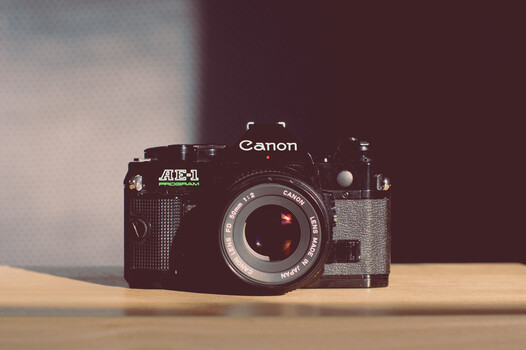
The Canon AE-1, introduced in 1977, was the first 35mm SLR built around a microprocessor, significantly reducing its parts count through automated manufacturing and modular construction. This engineering shift made the camera more affordable and accessible to a mass market, moving away from the complex, hand-assembled mechanical bodies favored by professionals. Its key feature was shutter-priority automatic exposure, which allowed users to select a shutter speed and let the camera handle aperture settings, simplifying the photographic process for beginners. Coupled with a national television advertising campaign, the AE-1 successfully transformed the single-lens reflex camera from a niche enthusiast product into a popular consumer item.
TAKEAWAYS
The Canon AE-1 was the first 35mm SLR to use a microprocessor, enabling automated exposure and manufacturing.
Automated production and reduced parts count made the AE-1 significantly more affordable than previous SLRs.
Shutter-priority auto exposure simplified photography for beginners, making it accessible to a mass market.
National television advertising positioned the AE-1 as an approachable camera for everyday consumers.