SUMMARY
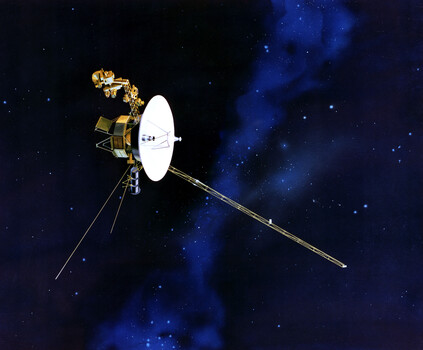
NASA's Voyager 1 and 2 missions utilized two 1970s vidicon cameras mounted on a steerable scan platform, enabling independent aiming from the spacecraft's main body. These cameras, a wide-angle and a narrow-angle lens, captured images of Jupiter, Saturn, Uranus, and Neptune. Due to significant light-speed delays, commands had to be pre-programmed hours or even days in advance, with no real-time control possible. Color images were created by combining multiple exposures through different filters after the data was transmitted back to Earth.
TAKEAWAYS
Voyager spacecraft used two vidicon cameras (wide and narrow angle) on a steerable platform.
Imaging relied on commands sent hours in advance due to light-speed delays.
Each image frame took approximately 48 seconds to read out, with no burst mode.
Color images were assembled on Earth from sequential exposures through different filters.