SUMMARY
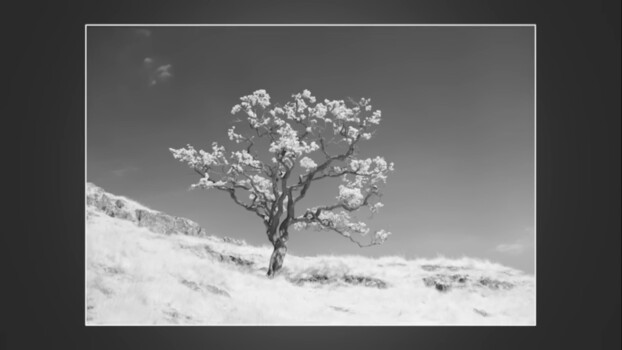
Infrared (IR) photography utilizes light frequencies outside the human visual spectrum, achieved through specialized lens filters or camera conversions that bypass standard IR-blocking filters. This method reveals unique visual properties, such as the "Wood Effect" where vegetation appears bright white due to chlorophyll's high reflectivity. Water and clear skies absorb IR radiation, resulting in dark or black tones. IR photography offers a distinct way to capture landscapes, particularly effective during bright, clear days.
TAKEAWAYS
Infrared photography captures light beyond the visible spectrum.
Specialized filters or camera conversions are used to achieve IR photography.
Vegetation appears white (Wood Effect) and skies dark due to IR light's interaction with materials.
IR photography can transform harsh daylight into unique landscape images.