SUMMARY
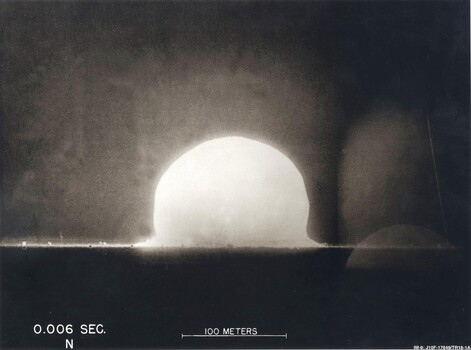
In 1945, approximately fifty cameras were deployed in steel-and-lead bunkers and instrument boxes around the Trinity test site to capture the detonation. The photographic rig, engineered by Julian Mack and Berlyn Brixner, faced the unprecedented challenge of recording an event ten times brighter than the sun with no prior exposure data and only one opportunity. The team used a strategy of spreading cameras across various speeds, apertures, distances, and angles, accepting that most images would be ruined. The resulting photographs became some of the most reproduced images of the 20th century and were later used to reverse-engineer the bomb's yield.
TAKEAWAYS
Fifty cameras were used to photograph the Trinity atomic bomb test on July 16, 1945.
The cameras were placed in hardened shelters and triggered automatically due to the extreme brightness and speed of the event.
Photographers had no reference exposure, relying on educated guessing and a wide range of settings to capture the detonation.
The images produced were crucial for scientific analysis, including determining the bomb's yield.