SUMMARY
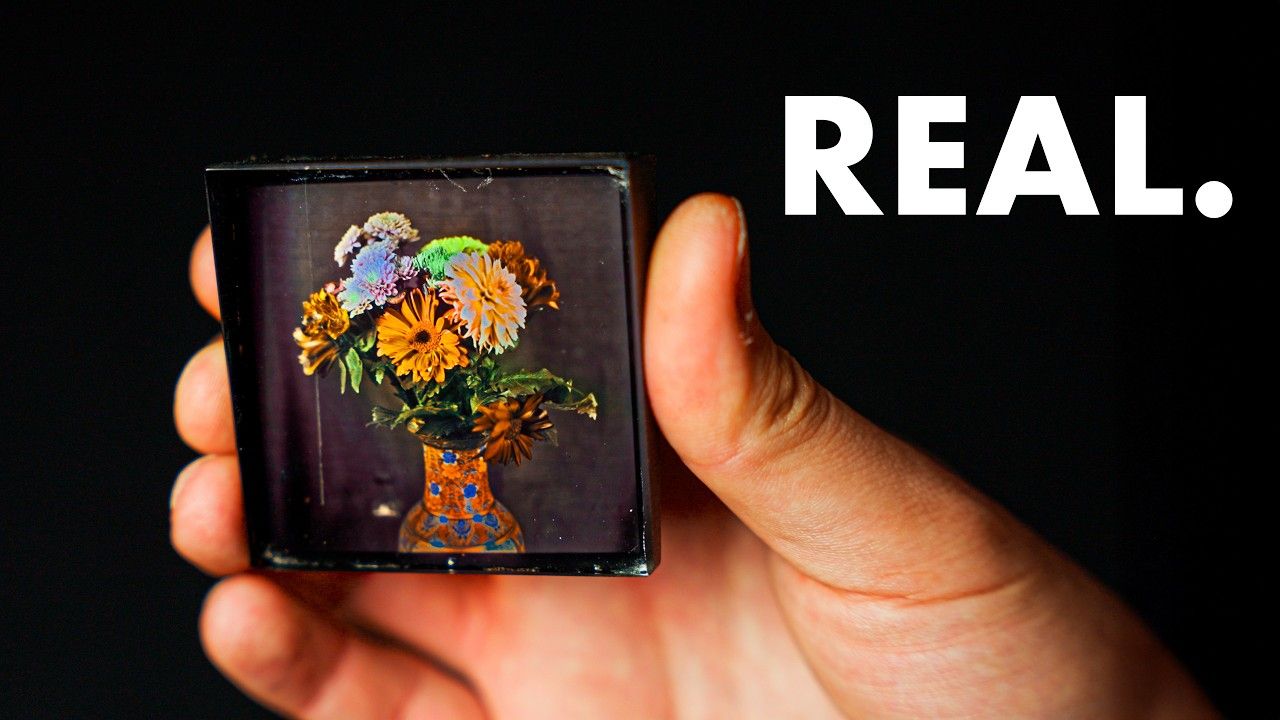
The Victorian-era Lippmann Process, a technique predating modern color photography, creates color through the physical structure of the photographic plate rather than dyes or RGB color mixing. This method records color via interference patterns within the emulsion, resulting in structural color similar to that seen in soap bubbles or butterfly wings. While it offers a potentially more accurate representation of original light wavelengths, the process is impractical due to long exposure times and difficulty in reproduction, preventing it from replacing conventional color photography.
TAKEAWAYS
The Lippmann Process, developed 135 years ago, creates color through physical structure, not dyes.
Color is recorded via interference patterns and standing waves within the photographic emulsion.
This structural color is physically encoded, unlike modern photography's reliance on RGB simulation.
The process is impractical for widespread use due to long exposures and reproduction challenges.