SUMMARY
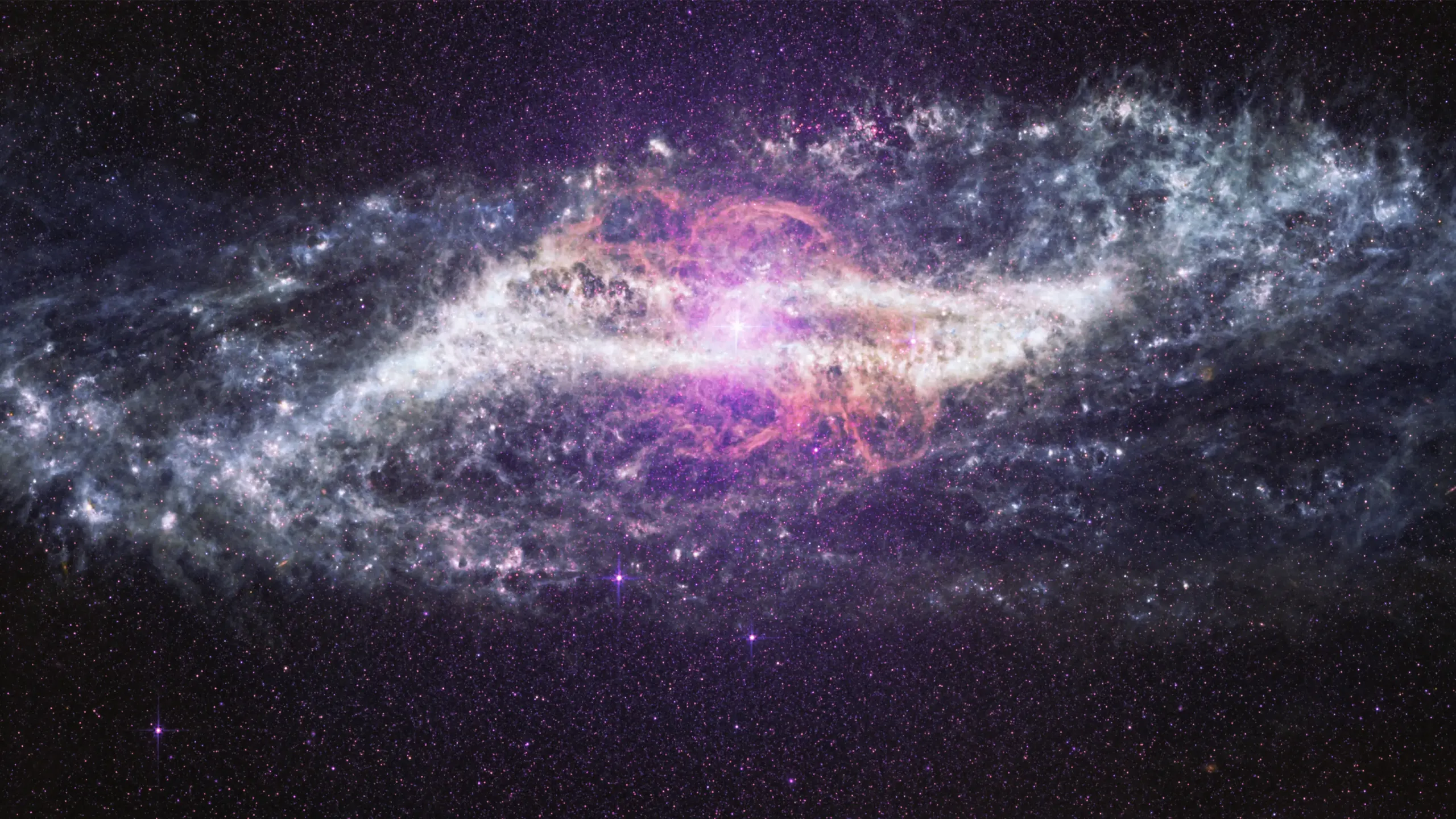
The James Webb Space Telescope (JWST) has provided new insights into the Centaurus A galaxy, located 11 million light-years away. Its Mid-Infrared Instrument (MIRI) can penetrate the cosmic dust that obscured details for previous telescopes like Hubble. These images reveal a warped band of stars and gas, potentially from an ancient galactic collision, and offer clues about the black hole's influence on star formation. Astronomers are calling this detailed exploration "galactic archaeology."
TAKEAWAYS
JWST's MIRI instrument reveals hidden structures in the Centaurus A galaxy.
The images provide unprecedented detail on star formations and cosmic dust.
Astronomers are investigating a potential ancient collision as the cause of the galaxy's structure.
The telescope's infrared capabilities are crucial for this "galactic archaeology."