SUMMARY
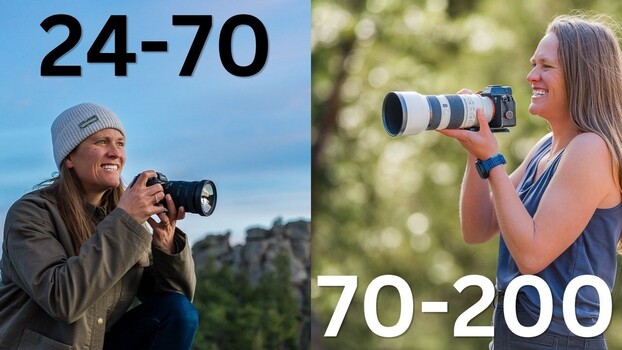
Choosing between a 24-70mm and a 70-200mm zoom lens is a common decision for photographers. The 24-70mm f/2.8 is a versatile 'workhorse' suitable for events, travel, and unpredictable shooting scenarios, covering wide to portrait focal lengths. In contrast, the 70-200mm excels at compression and subject isolation, creating distinct background blur and allowing photographers to shoot from a distance. The guide also explores the differences between f/2.8 and f/4 apertures, noting that f/4 versions are lighter and less expensive but may require higher ISO in low light. Renting or buying used is recommended to assess a lens's practical feel before purchasing.
TAKEAWAYS
The 24-70mm f/2.8 is a versatile lens for varied shooting conditions and unpredictable events.
The 70-200mm lens offers compression and subject isolation, ideal for candid shots and portraits.
f/4 versions of these lenses are lighter and cheaper but less effective in low light than f/2.8.
Testing lenses through rental or used purchases is advised before committing to a buy.